Road Stories: Lessons, Mishaps & Encounters from 365 Days Cycling South America
When someone decides to cross an entire continent on two wheels, their imagination is usually filled with picture-perfect postcards: towering mountains, silent deserts, untouched coastlines, and the exhilarating breeze against their face. Yet after pedaling more than 15,000 kilometers over 365 uninterrupted days, you discover that geography is merely the stage. The true substance of a long journey lies in the hardships that strip away your pride, the liberating act of shedding excess baggage, and, above all, the astonishing generosity of anonymous strangers who step across your path.
Gathered here are the memories, aches, improbable stories, and hard-earned lessons that defined this crossing from the Atlantic to the Pacific, from the Pampas to Patagonia, from the Atacama to the Bolivian Altiplano, and back through the depths of the Amazon rainforest. Real stories from someone who learned that to truly know the world, one must first learn to trust it.
1. Breaking Inertia in Ourinhos
In 2007, at 27 years old, I lived a completely stable life in the countryside of São Paulo, in the city of Ourinhos. I had spent five years working at the same company, enjoyed a comfortable routine, good friends, my own car, and a tangible sense of security. Yet a restless ache wouldn't leave me alone: an instinctive, visceral urge to see the world, to push past the known horizon.
The dilemma that tormented me was purely mathematical. With only four weeks of paid vacation each year, it would take me decades to explore even a tiny fraction of the places I dreamed of. I devoured accounts by Brazilian cycle-touring pioneers like Antônio Olinto—who had cycled around the world back in the 1990s—and realized life was passing far too quickly outside my office window.
Eventually, I had to look in the mirror and make a radical choice. To secure the only two things I genuinely lacked—time and resources—I took the leap: I resigned from my job, sold my car, and spent a full year saving every single penny. My former employer, GSP Loteamentos, recognized the integrity of that dream and stepped in with essential sponsorship covering a third of the expedition's costs. There was no turning back: I had traded the safe riverbank for the boundless current.
"Selling the car and walking away from routine was never an escape from reality, but an urgent quest for it. When you strip away the armor of stability, you uncover the true weight of time and the pressing need to live your own dreams."
2. The Crash in Ibaiti and the Trial of Patience
On September 7, 2008, I rolled out of Ourinhos carrying everything I owned in four panniers strapped to my bicycle. My dear friend Martinho rode alongside me during those first few days. A youthful euphoria buzzed in the air—an intoxicating feeling that the entire South American continent was waiting for us with wide-open arms.
That euphoria, however, lasted less than 48 hours. On our second day on the road, while speeding down a steep and uneven stretch in northern Paraná near the town of Ibaiti, I suffered a violent crash. The impact was brutal, and sharp pain shot through my left wrist instantly. Diagnosis: bone fracture.
It felt like an icy bucket of water poured over my head. I had to abort immediately, return home, and put my arm in a cast. What followed were 56 long, agonizing days of immobilization and physical therapy, watching helplessly as my hard-won physical conditioning evaporated while the calendar marched forward mercilessly. I was racing against a strict seasonal window: I needed to reach the southern tip of Patagonia at the peak of austral summer; any significant delay would make Tierra del Fuego impassable due to sub-zero polar winter storms.
The moment the doctor removed the plaster cast—still feeling lingering aches in the joint—I strapped the panniers back onto the bike and departed once again. The road was demanding patience and grit before I had even crossed my home state's border.
3. Blind Trust in Santa Vitória do Palmar
I pedaled down through the coasts of Paraná and Santa Catarina until crossing into Rio Grande do Sul. The southerly winds across the flat coastal plains blew like a solid concrete wall, forcing a grueling effort just to crawl forward at 10 or 12 kilometers per hour. By the outskirts of Santa Vitória do Palmar, near the border with Chuí, I pulled into a lonely gas station completely drained, wrapped in pitch darkness.
I approached the attendant on duty, a young man named Igor, and asked if there might be any sheltered corner in the yard where I could pitch my tent without bothering anyone. Igor looked at my mud-splattered bicycle, looked at me, and pointed toward an abandoned roadside restaurant building adjacent to the station. He told me I could sleep inside, sheltered from the biting rain and wind.
As I unrolled my sleeping pad, we struck up a conversation. He asked about my route, about having the nerve to travel alone, about the dream of reaching Ushuaia. An effortless bond formed between us. Just before midnight, when his shift ended, Igor returned to where I was settling in and made an extraordinary gesture: "Thiago, pack up that tent. You're coming home to sleep at my place. My wife Juliane is already waiting for us with hot dinner."
That evening, Igor and Juliane welcomed me with a warm shower, a hearty home-cooked meal, and a soft bed. They didn't know me; to them, I was just a dusty stranger pushing a loaded bike, yet they treated me like a brother. It was my definitive baptism into the profound solidarity of the open road.
"Human trust is not a mathematical equation governed by fear. When someone opens their front door to an exhausted traveler, they aren't merely offering shelter; they are reaffirming their deepest faith in human kindness."
4. The Note at the Taim Fire Station and the Unlikely Encounter with Vincent
Days before reaching Santa Vitória do Palmar, I crossed the desolate and breathtaking Taim Ecological Reserve. In that vast landscape of wetlands and grazing capybaras, I camped beside a small Highway Firefighters post. When saying goodbye, I left a scribbled note with the firefighters, writing down my website address and a brief message of gratitude.
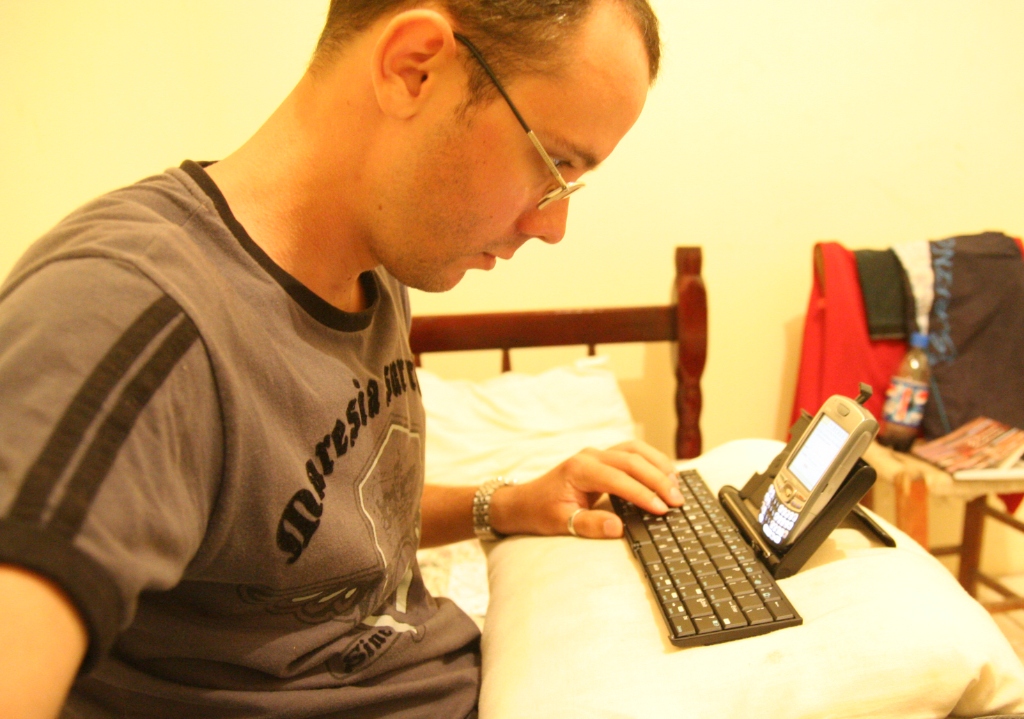
Time passed. I crossed Uruguay, took the ferry from Colonia del Sacramento, and landed amid the urban bustle of Buenos Aires. One afternoon, I walked into an internet café in the San Telmo neighborhood to update my travel journal and check my inbox. Waiting for me was an astonishing email:
"Hi Thiago! I'm Vincent, a French-Chilean cyclist. I set off from Rio de Janeiro and I'm pedaling toward Cuba. I stopped at the Taim fire station two weeks after you; the guys showed me your note and said another cyclist was a few days ahead. I just checked your blog and saw you're in Buenos Aires... well, I'm here too!"
We met up that very afternoon in the Argentine capital and talked for hours. We were two rookie travelers, full of plans and driven by the same quiet resolve to confront the unknown. We decided to ride together from that point on—forging a partnership that would carry us across thousands of kilometers through the heart of Patagonia.
5. The Patagonian Anvil: 2,000 km Against the Winds of Ruta 3
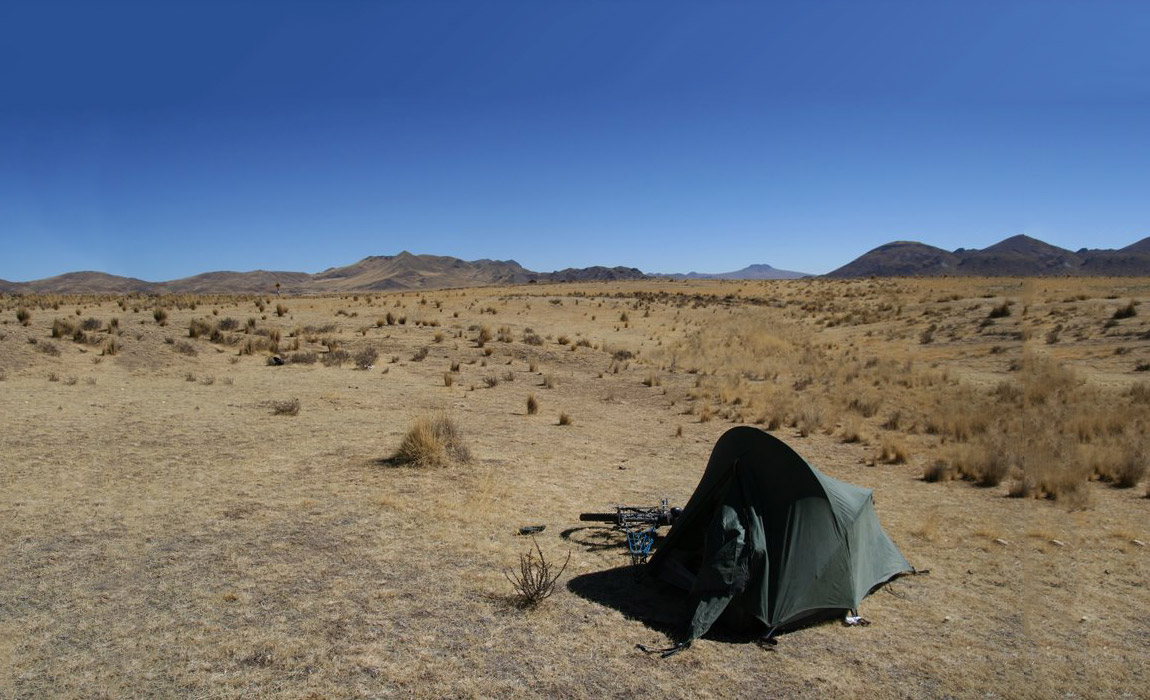
Riding legendary Ruta 3 across the Argentine steppe is an experience that permanently redrew my physical and mental limits. Vincent, myself, and an occasional fellow traveler, Max, formed a small peloton facing the endless pampa under the scorching sun of the austral summer.
Patagonia is ruled by an uncompromising deity: the wind. Blasting relentlessly from the south and west, gusts frequently reached 80 to 100 km/h. This was no gentle headwind; these were razor-sharp crosswinds that violently destabilized our 50-kilogram loaded rigs, slamming handlebars toward the tarmac or shoving wheels off into the loose gravel shoulder. On many sections, leaning into the wind at an angle of nearly 30 degrees was the only way to avoid being tossed to the ground.
On one of our most dramatic days, the distance between roadhouses was far greater than we had calculated. Under the blistering afternoon heat, our drinking water ran dry in the middle of nowhere. Panic began creeping in. That was when we learned to wave down passing long-haul truckers. Rough-edged road veterans slowed their massive eighteen-wheelers, pulled onto the shoulder, and handed us whole gallon jugs of ice-cold water, loaves of bread, and fruit with genuine smiles.
Vincent was an exceptionally strong and fast rider, which forced me to elevate my endurance dramatically. I learned to keep my head down and grind through massive stages of 140 to 150 kilometers a day purely on mental discipline. That stretch was our true trial by fire.
6. The Wild Solitude of Valdés and the End of the World in Ushuaia
Before descending to the deep south, we diverted from the main highway into the Valdés Peninsula. It was easily one of the rawest and most primal landscapes of the entire journey. Camping among wild guanacos, sea lions, and southern right whales breaching just yards from the pebble beaches restored our sense of humble wonder before the sheer scale of the natural world.
In Caleta Olivia, south of Comodoro Rivadavia, Vincent and I had to part ways. His visa constraints forced him to cross into Chile early, whereas my goal was non-negotiable: I had to touch the milestone at Ushuaia.
I pushed on alone across the steppes of Tierra del Fuego, crossing the Strait of Magellan on a ferry beaten by gray, choppy waves. The landscape gradually turned dramatic, with peat bogs giving way to the first forests of wind-twisted lenga trees and the snow-capped peaks of the Fuegian Andes. When I finally crested Garibaldi Pass and gazed upon the Beagle Channel, my chest tightened. Touching the wooden sign that read "Ushuaia - Fin del Mundo", I sank to my knees beside my bicycle.
The first half of my great life dream was complete. But the road whispered that the true test was only just starting: now, I had to turn around and ride all the way back up the continent.
"Reaching the End of the World on a bicycle isn't a badge of conquest over the earth, but a quiet triumph over the inner coward that once urged you to stay home."
7. The Glaciers of the Carretera Austral and the Chilean Fjords
Pedaling north into Chile revealed a South America utterly different from the arid Argentine plains. Southern Chile is a labyrinth of jagged mountains, hanging glaciers, turquoise glacial meltwater rivers, and nearly nonstop rain.
I rode for hundreds of kilometers along the unpaved ripio of the Carretera Austral. There, geography dictates its own pace: on multiple occasions, the road simply ended at the edge of a deep fjord, forcing travelers to wait for small ferries that operated only once or twice a week. The isolation was total; pioneer settler villages survived on timber, fishing, and the comforting warmth of crackling wood stoves.
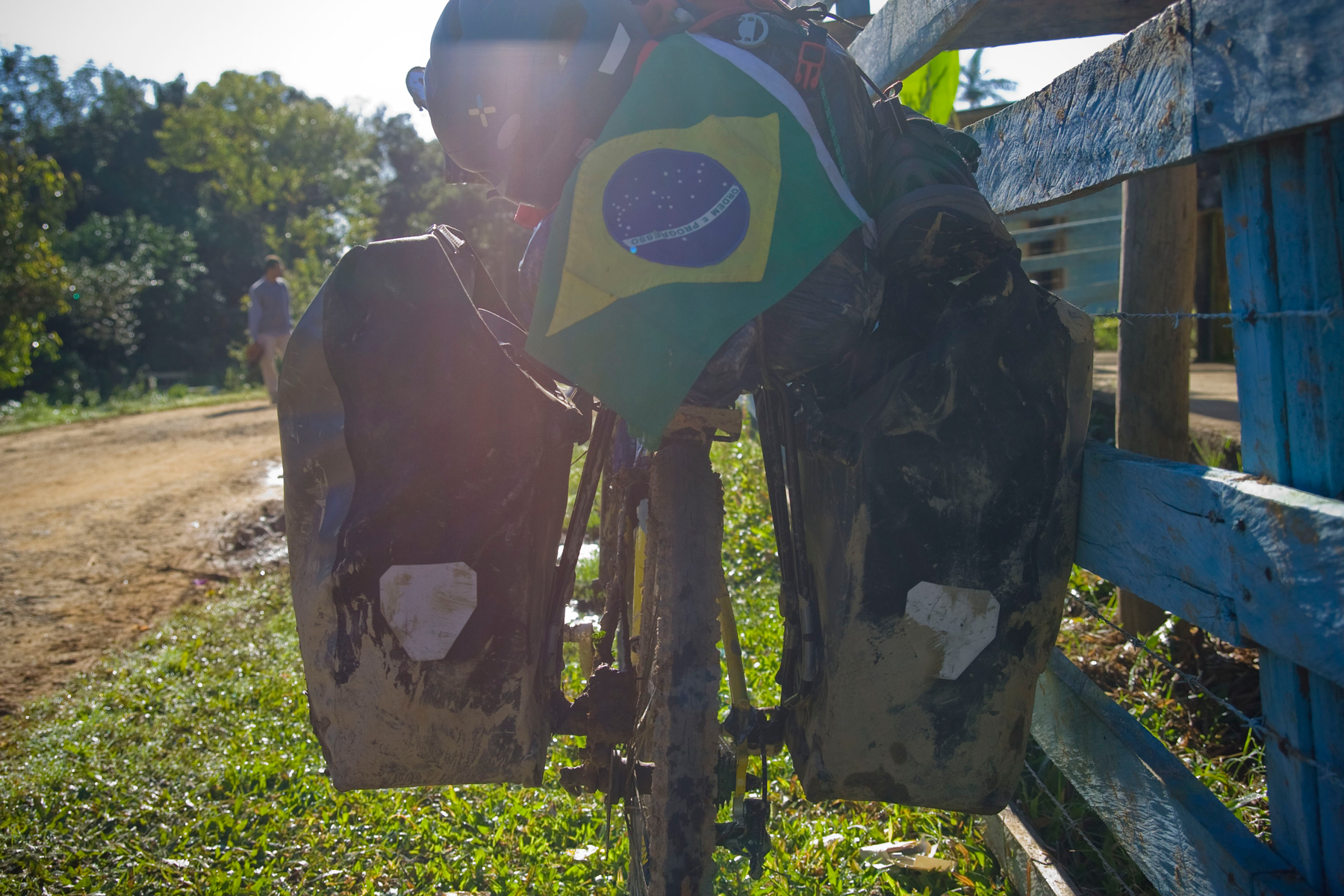
I crossed over to the Chiloé archipelago, a mystical land of UNESCO World Heritage wooden churches and centuries-old maritime folklore. The warmth of the Chilean people left a lasting impression: in every hamlet, noticing the Brazilian flag on my pannier, locals approached with genuine curiosity, sharing steaming empanadas and unlocking storage barns so I wouldn't have to pitch my tent in the relentless downpour.
8. Ralf: The Partnership That Needed No Words
Further north, approaching the edge of the Chilean desert along the Pan-American Highway, my path crossed with Ralf, a quiet German touring cyclist with tireless legs who was heading south down the continent.
There was an amusing and formidable hitch: Ralf didn't speak a single word of Portuguese or Spanish, and I didn't know a syllable of German. Both of our English vocabularies were sparse and utilitarian. Despite this, we decided to ride north together for over two weeks.
Those days turned into one of the most profound lessons in human companionship I have ever experienced. We rode side by side for six or seven hours a day, coordinated stops with simple nods of the head, shared a camping stove at dusk, set up tents in the same clearing, and pointed at the paper map to agree where we'd sleep the following night. We needed no elaborate speeches; the shared grit of the road, mutual respect, and the steady cadence of effort created a flawless bridge of understanding.
"The bicycle speaks a universal language. When two travelers share the dust of the road, the thirst, and the silence of the horizon, spoken words become entirely unnecessary."
9. The Mineral Vastness of the Atacama and the Coming of Age
Entering the Atacama Desert was the fulfillment of one of my earliest childhood dreams. This was the driest desert on Earth, an extraterrestrial mineral landscape where silence has physical weight.
Crossing it proved to be one of the most demanding trials of the entire expedition. Endless straightaways of the Pan-American stretched for tens of kilometers without a single curve or tree, at elevations ranging from 2,000 to 3,000 meters. The daily temperature swing was brutal: at midday, asphalt melted under 40°C of arid heat; at night, beneath the clearest, most star-drenched skies on the planet, temperatures plummeted toward freezing.
There, around the ten-month mark of the journey, an internal transformation crystallized. I looked down at my dust-caked bicycle, my calloused hands, and the modest provisions laid out by the roadside, and realized: I was no longer that hesitant young man from Ourinhos who worried about getting a flat tire or finding a place to sleep. The road had taught me everything. I felt a deep, steady peace and an unshakable conviction that, should I choose to, I was fully prepared to ride around the entire world.
10. At 4,700 Meters on the Altiplano and the Infinite Mirror of Uyuni
Leaving northern Chile behind, I confronted the colossal grades of the Andes to enter the Bolivian Altiplano. Climbing into that high plateau was a battle for breath: at elevations exceeding 4,000 meters, every pedal stroke felt as though it demanded the lungs of ten people. The thin air burned the throat, sub-zero nights froze water inside my bottles inside the tent, and my body cried out for rest.
Yet the reward surpassed human imagination: the Salar de Uyuni. Riding across the largest salt flat on Earth—more than 10,000 square kilometers of blinding white expanse at 3,650 meters altitude—feels like sailing across a frozen ocean of pure light. There are no tracks, no signposts, no visual markers; only the endless white horizon beneath an impossibly deep blue sky.
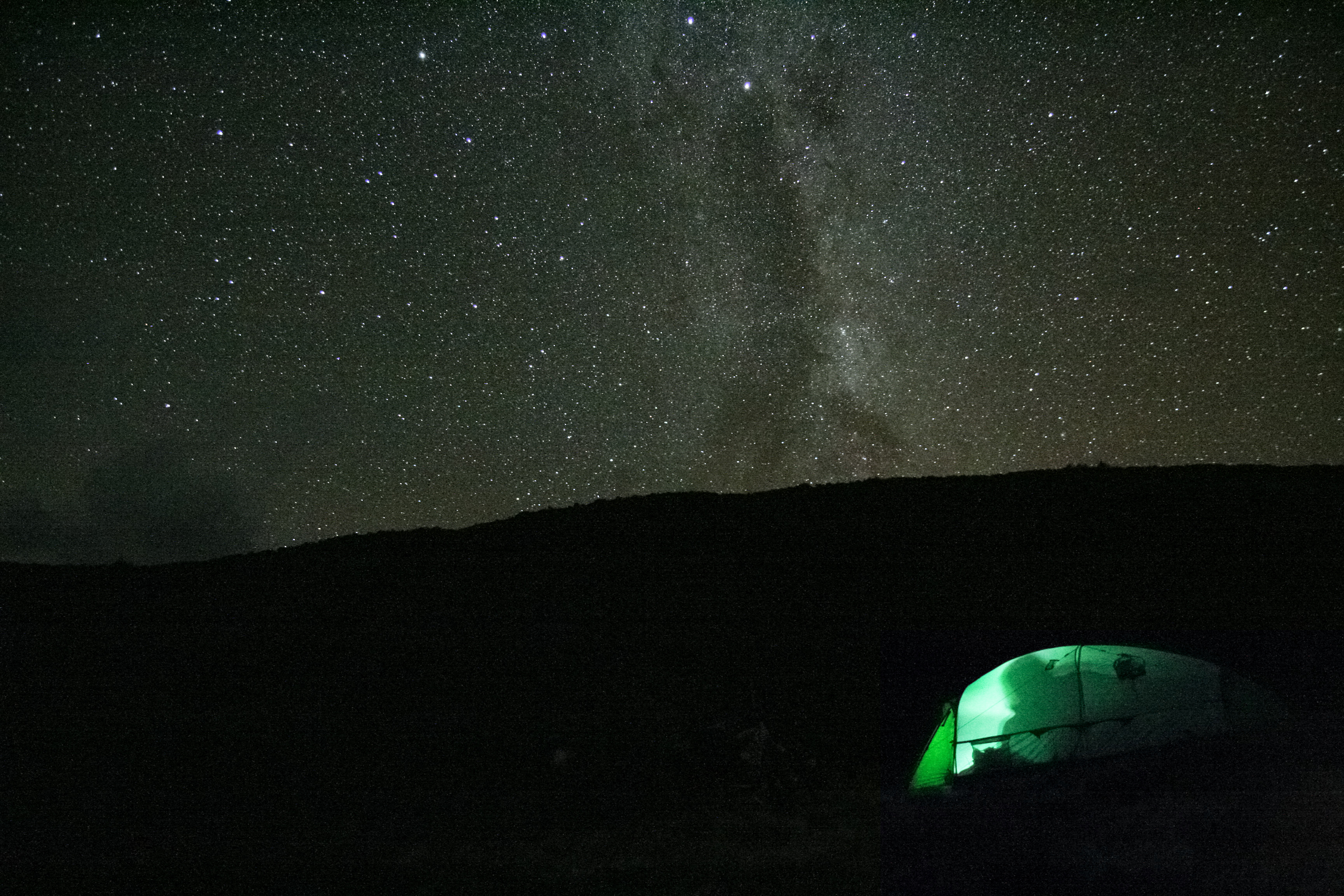
Wild camping in the heart of the Salar, dozens of kilometers from the nearest shore, was the most transcendent night of my life. The stillness was so total that I could hear my own pulse thumping in my ears. As darkness fell, the Milky Way burned with such brilliant clarity that the stars seemed close enough to brush against my tent canvas.
11. The "Abandoned" Bicycle on Isla del Sol
Continuing north, I arrived in Copacabana, the picturesque Bolivian town nestled on the shores of sacred Lake Titicaca. My plan was to board a ferry to visit Isla del Sol—the mythical birthplace of the Inca Empire—spend a few hours exploring on foot, and return by evening.
I was pushing my heavy, gear-laden bike toward the docks, intending to hoist it aboard, when the ticket agent called out: "Amigo, don't bring that bike to the island. There are no roads there—only steep Inca stone stairways and narrow walking trails. You'll be carrying dead weight on your shoulders all day. Leave your bicycle right here inside my ticket office."
I looked at him. He pointed to a spot clearly visible through the large glass window facing the busy main street. I hesitated for a brief second. That bicycle held everything I possessed in the world: tent, clothes, tools, spare parts, and my recorded memories. But I took a deep breath, chose to trust, and propped the unlocked bike against the wall.
I boarded the ferry. Arriving at Isla del Sol, the surreal beauty of the azure waters at 3,800 meters and the ancient energy of the terraced hills captivated me so completely that I lost all sense of time. My one-day visit stretched into two. I returned to the mainland solely to check on the office: the bicycle was untouched, right where I had left it. I spoke with the young man, told him I was heading back to the island, and stayed out there for another five days!
When I finally returned for good a week later, my bicycle was pristine, safe, and guarded with utmost care. A Bolivian stranger who had never seen me before in his life honored my trust with impeccable integrity.
"We tend to project our worst fears onto the world. Yet when we let go of suspicion and place what we hold most dear into the hands of a stranger, humanity almost always responds with honor and grace."
12. From Andean Summits to the Peruvian Jungle: The Three-Hour Descent
In Peru, the terrain reached its absolute peak of severity. After departing Cusco at 3,600 meters, I pushed through one of the most grueling ascents of the entire journey to reach a mountain pass at 4,725 meters (15,500 feet), enveloped in biting cold and razor-thin air.
And then came the payoff: from the crest of that mountain pass began the longest downhill run of my life. Three uninterrupted hours of descent without pedaling a single stroke! Plummeting from Andean heights down toward the Peruvian Amazon basin, I watched the stark, icy mineral landscape transform within minutes into a lush, humid, emerald rainforest. The physical shock was immediate: after 48 days in the parched, thin air of the Altiplano, the heavy, oxygen-rich Amazonian air felt almost thick to breathe, but it surged through my veins with newfound vigor as I raced toward the Brazilian border.
13. Returning Through Acre and the Children of BR-364 in Rondônia
Crossing the border back into Brazil through the state of Acre brought a swirl of conflicting emotions. On one hand, immense pride in returning to my homeland after nearly a year abroad on two wheels. On the other, the immediate return to a familiar chorus of warnings and dire predictions.
At almost every stop in Acre and western Rondônia, drivers and locals warned me against the deadly dangers of highway BR-364: "Don't do it on a bicycle! That road is treacherous, lawless country—infested with bandits, gunmen, and illegal timber runners."
I chose to keep riding and let reality speak louder than gossip. What I encountered along BR-364 was pure human poetry. Whenever I pulled off the shoulder near small rural hamlets to catch my breath in the suffocating jungle humidity, dozens of children came sprinting out of nowhere, eyes wide and smiles beaming. They gathered around the loaded bike, pressed the horn, asked where I had come from, and eagerly asked to hear stories about the snowy mountains.
Settler families and river dwellers offered cold well water, generous slices of sweet watermelon, and welcome shade beneath their mango trees. The highway that rumors had painted as a corridor of dread turned out to be an endless fountain of genuine warmth.
14. The Illusion of Luggage and the Weight We Shed Along the Way
There is an undeniable truth in bicycle touring: the novice cyclist always sets out carrying three times more gear than they actually need. Back in Ourinhos, I had packed clothes for every season, heavy tools, redundant spare parts for far-fetched mechanical breakdowns, pots, pans, and countless gadgets. My bike looked like a wobbly moving van.
Across the early mountain ranges of Paraná and Rio Grande do Sul, gravity swiftly taught me a lesson. Every extra pound on your back and frame demands an unforgiving toll from your knees and lungs.
Throughout those first months, I adopted a healthy habit of stopping at post offices to ship whole boxes of non-essentials back home, or simply giving away clothes and utensils to anyone in need along the road. By the end of the expedition, I was riding with half the volume and half the weight I had started with—and still had everything necessary to live comfortably.
"Hauling excess weight on the road isn't a mark of sensible logistics, but a direct reflection of our fear of the unknown. The more you learn to trust the path ahead, the fewer material burdens you need to drag behind you."
15. The Evening Water Bottle Ritual
If anyone were to ask me what the single most effective "safety strategy" was throughout 365 days on the road, my answer would be simple and surprising: an empty water bottle.
Around 5:00 or 5:30 in the afternoon, as the sun dipped toward the horizon and the comforting aroma of home-cooked dinner began wafting from the chimneys of roadside homesteads, it was time to act. I would pick a modest farmhouse, dismount at the front gate with an empty bottle in hand, and call out politely: "Good afternoon! Would you be kind enough to let me fill my water bottle from your tap?"
Asking for water is the most innocent and universal gesture one human being can make to another. It triggers no suspicion; it awakens an ancestral instinct of hospitality. The homeowner would walk to the fence, look at the dust-covered bike, and ask where on earth I was riding from. As the bottle filled, conversation flowed effortlessly.
With uncanny consistency, nine times out of ten that glass of water turned into a generous plate of warm food at the family table; and dinner turned into a caring invitation: "Don't go pitching your tent in the brush, son. Set it up on our porch, or take the spare room in the back so you're safe and dry tonight."
16. Vincent's Paradox and the Certainty That the World Is Good
To this day, people often ask me: "Thiago, you rode 15,000 kilometers through remote backroads and major South American metropolises and never got robbed? Weren't you terrified of criminals?"
To answer that, I always share the story of my friend Vincent. He traveled just as I did: setting off from Rio de Janeiro, traversing Patagonia, Chile, Peru, all of Central America, and reaching Cuba. Over a full year riding through the most economically impoverished rural communities across the continent, he never suffered a single mugging or act of violence. Yet when Vincent concluded his expedition, flew home to France, and settled back into Paris, he was mugged on the street and had his bicycle stolen within just a few weeks!
The secret does not lie in an absence of trouble in the world, but in the spirit with which we approach it. When you travel sealed inside a motor vehicle or cocooned inside a tour bus with headphones on, you remain a detached spectator. But when you arrive on a loaded bicycle, sweaty, tired, and visibly vulnerable, you pose no threat to anyone. The bicycle disarms hostility and brings out the very best, kindest, and most generous impulses in human hearts.
That was the greatest treasure of my 365 days on the road: the world is not the den of wolves portrayed by sensationalist news headlines. It is inhabited by decent, hardworking people eager to lend a hand to anyone pursuing an honest dream. If you never take the first step, you will never know.
Want to dive deeper into this journey?
The complete day-by-day diary of this 365-day expedition across South America—including all historical maps, daily field journals, and photography galleries from each chapter—is gathered in the book Trilhando Sonhos.